
公開日
『ワインの化学:ミシガン州南西部における味、科学、そしてコミュニティのつながり』

ワインは、柑橘類、カカオ、花の香り、土のニュアンスといった詩的な言葉で表現されることが多いですが、それぞれの香りの背景には、畑、醸造家、そして時間によって形作られた複雑な化学の物語があります。多くのワイン愛好家にとって、科学の存在は見えないままです。.
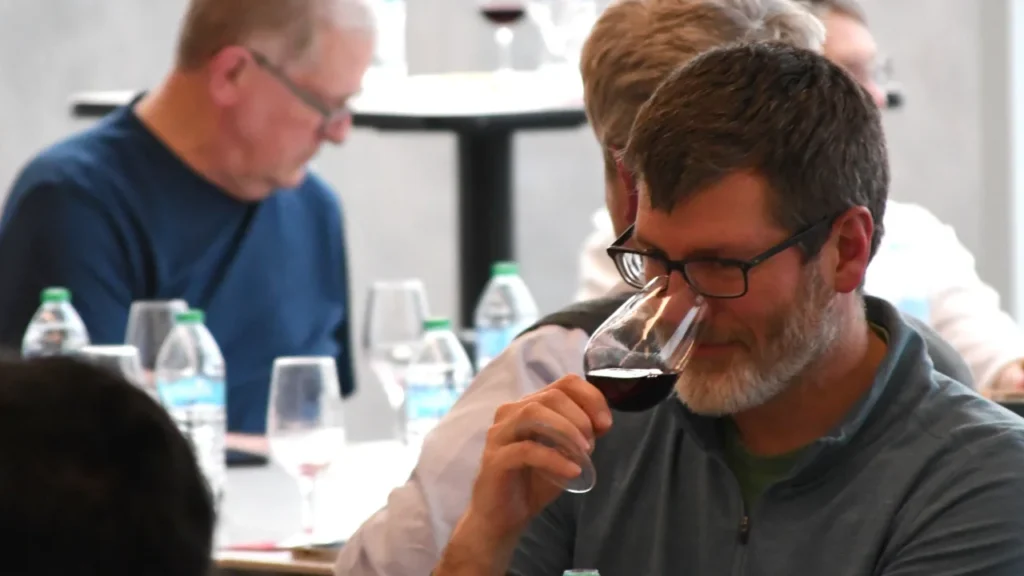
アット ワインの化学, 、LECOとレイク・ミシガン・カレッジが共催した試飲イベントでは、科学が研究室からグラスへと飛び出しました。参加者は、地元産のワインを試飲しながら、化学が私たちの嗅覚や味覚、そして楽しみの感覚をどのように解き明かすのかについて学びました。.




真の地域パートナーシップ
LECOの本社は、ミシガン湖岸アメリカン・ヴィティカルチャー・エリア(AVA)の中心地であるミシガン州セントジョセフにあります。ミシガン州南西部に位置するこの130万エーカーの地域は、同州のブドウ総生産量の80%以上を占めています。北緯42度に位置するこの レイク・ミシガン・ショアAVA フランス、ドイツ、スペインをはじめとするヨーロッパの有名なワイン産地と地理的に似ています。氷河期に形成された土壌と「レイク・エフェクト(湖沼効果)」が、非常に生産性の高い農業地域を生み出しています。.
同じ地域の大部分にサービスを提供し、, レイク・ミシガン・カレッジ (LMC)は、近隣のミシガン州ベントンハーバーにある公立の地域コミュニティ・カレッジです。LMCには、多くのプログラムや地域社会へのサービスの中でも、中西部で唯一の教育用ワイナリーである レイク・ミシガン・ヴィントナーズ.
彼らの ワイン・栽培学技術プログラム, 近隣の畑でのブドウの収穫から、破砕、熟成、そしてボトリングや提供に至るまで、ワイン造りの全工程を、完全に機能するワイナリーおよびテイスティングルームで、学生たちは実践的に学ぶことができます。.
複雑な化学の成長
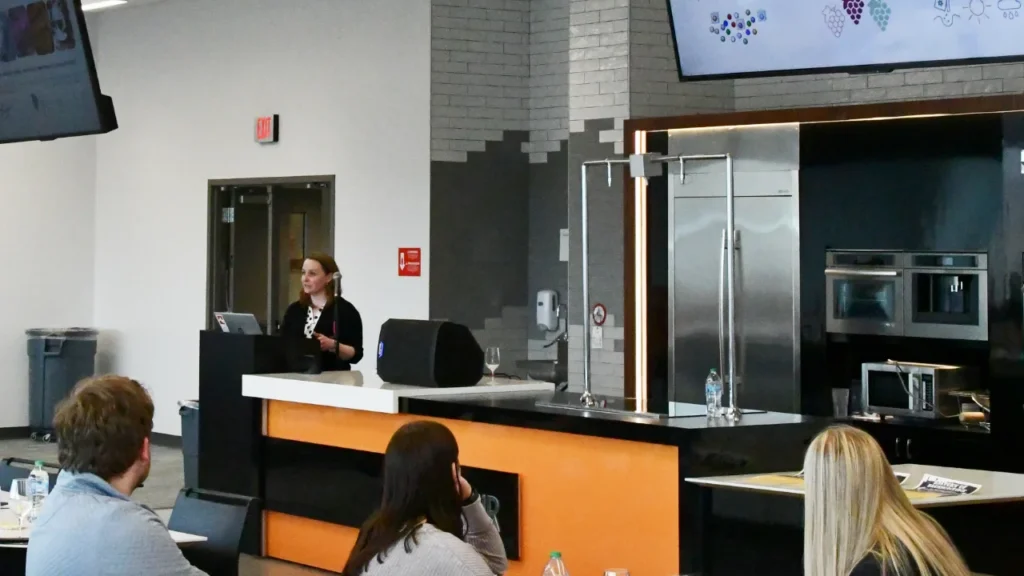
ワイン造りのプロセスにおけるあらゆる判断が最終製品に影響を与えるものであり、LECOの機器は、そのすべての工程においてワイン醸造家をサポートします。Organic Instruments社のLECOプロダクトマネージャー、ジャスティン・レディアード氏は(下、左)、水分測定の重要性と、土壌の健康に影響を与える必須元素(炭素、窒素、硫黄)の分析の重要性について説明しました。.
窒素と硫黄はどちらも植物の成長に不可欠な栄養素です。農学者たちは CN828 そして SC832 土壌中の利用可能な養分を特定し、肥料散布に関する意思決定に役立てるため。総有機炭素(TOC)の測定値は、土壌中の有機物の量を反映しています。炭素の形態別および含有量の詳細な特性評価は、土壌構造の改善、保水力の向上、および微生物の生命維持の基本となります。.

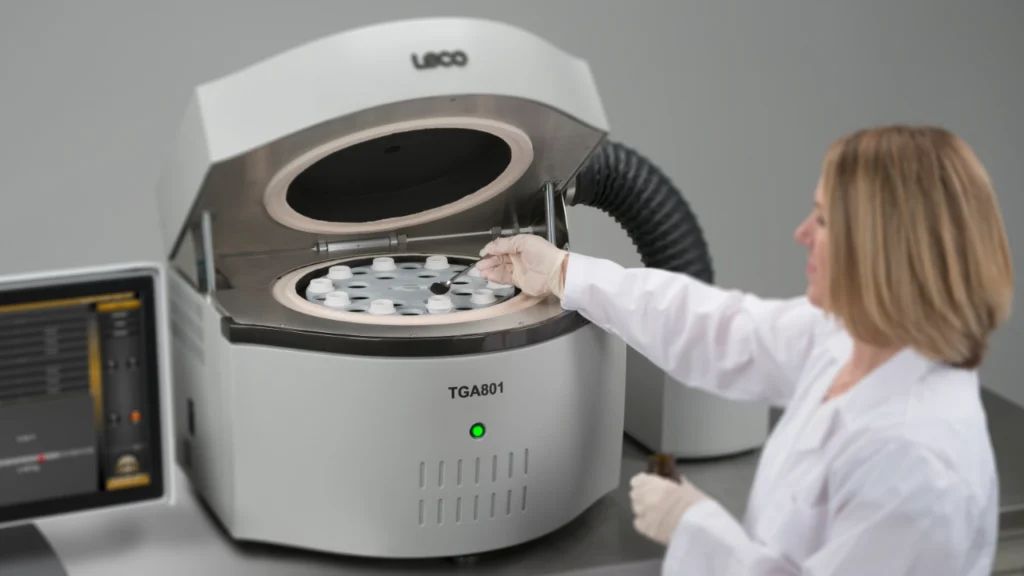
LECO法を用いた熱重量分析により測定された水分量 TGA801 そして TGM800, 、植物の健康にとって不可欠であり、栄養分を運び、土壌温度を調節し、さらに微生物の生活を支えている。水分含有量の正確な測定は、土壌中のさまざまな分析上重要な成分を評価する上での重要な要因としても機能する。ブドウ畑においては、水分と灌漑に関する決定がブドウの健康と成長に影響を与え、それが風味づくりの基礎を提供する。.
フレーバーの開発
ブドウやワインには、分析物(アナライト)と呼ばれる数百もの化学化合物が含まれています。分析ツール、特にガスクロマトグラフィー質量分析法(GC-MS)は、これらの分析物を測定し、サンプルの特性や化学組成をより深く理解するために使用されます。分析物はブドウ畑で形成され始め、ワイン造りのプロセス全体を通じて形成され続け、各段階での変動が異なるワインごとに異なる分析物の混合をもたらします。.
ブドウが収穫された瞬間から、化学的変化が始まります。ブドウには、アロマ寄与する分析対象物(アナライト)の一種であるテルペンなど、多くの分析対象物が含まれています。破砕によって果汁が放出され、化合物が酸素にさらされ、酵素反応が活性化されます。酵母を加えることで、果汁の発酵が始まり、果汁中の糖分がアルコールに変換され、他の反応を通じて新しく異なる分析対象物の組み合わせが生成されます。多くのアロマに寄与する別の種類の分析対象物であるエステルは、発酵中に多く生成されます。熟成は発酵を緩慢にし、風味が発達するのを促すとともに、樽や貯蔵方法からワインに新たな分析対象物を加える可能性もあります。.
ワインの風味は、瓶詰め後も変化し続けます。分析対象物質はゆっくりと反応を続け、ワインの特性を絶えず変化させています。製造工程におけるあらゆる判断や工程が、私たちが感じる香りと風味に影響を与えます。LECOのGC-MSは、これらの香りと関連する分析対象物質を特定するのに役立ちます。.
相性を感じる
試飲に先立ち、LECOの化学者たちは、ミシガン湖ヴィンターズのワインのうち4種類を、以下の方法を用いて分析しました。 Pegasus BTX 4D GCxGC-TOFMS プラットフォーム。この強力な分析ツールにより、ワインから何百もの成分が検出されました。テイスティングは、ティム・ゴドフリー(LMCワイン・栽培技術ディレクター)の共同指導のもとで行われました。; 下、左)およびリズ・ハムストン=フルマー(分離科学アプリケーション化学者、LECO;; 右下).

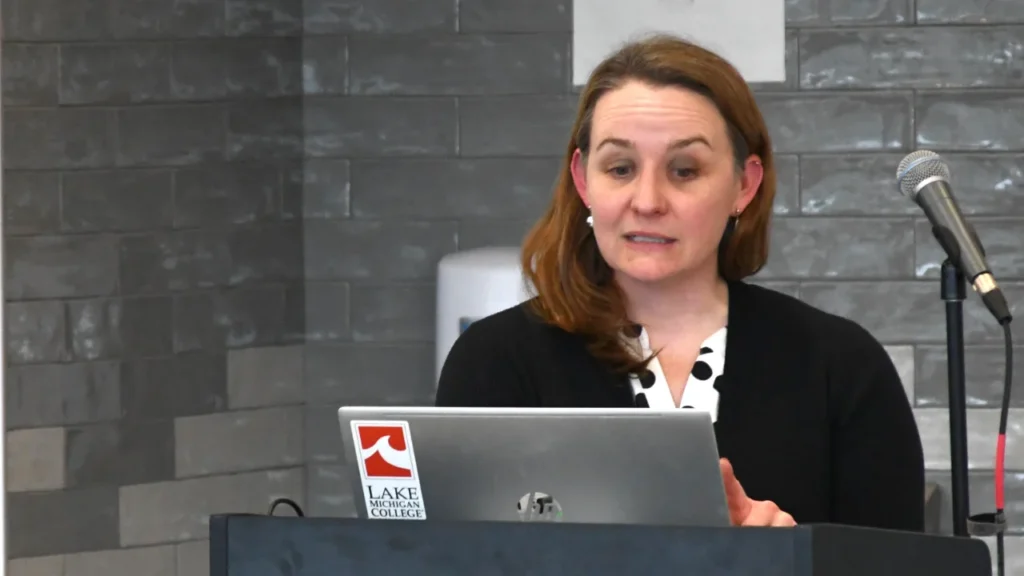
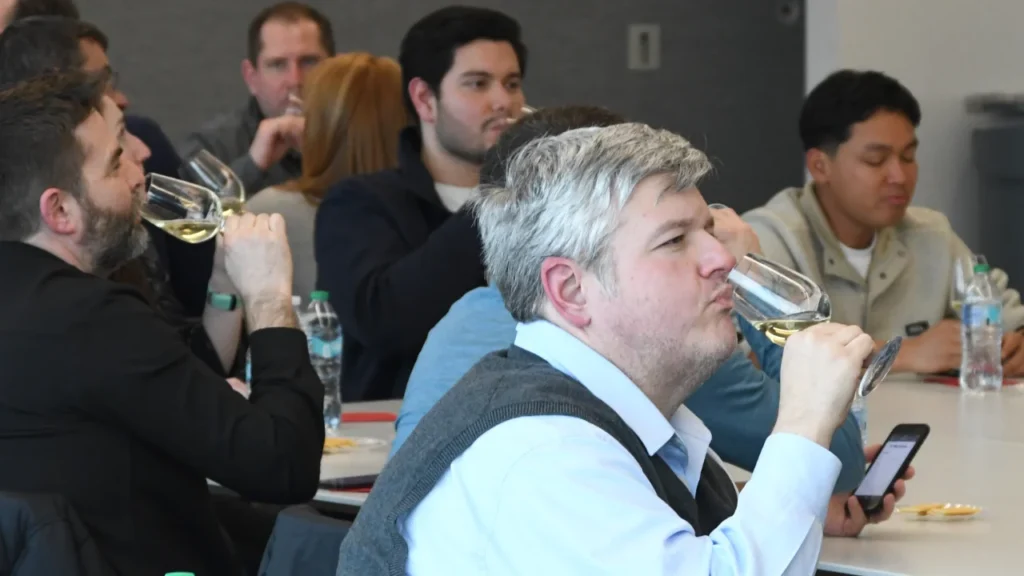
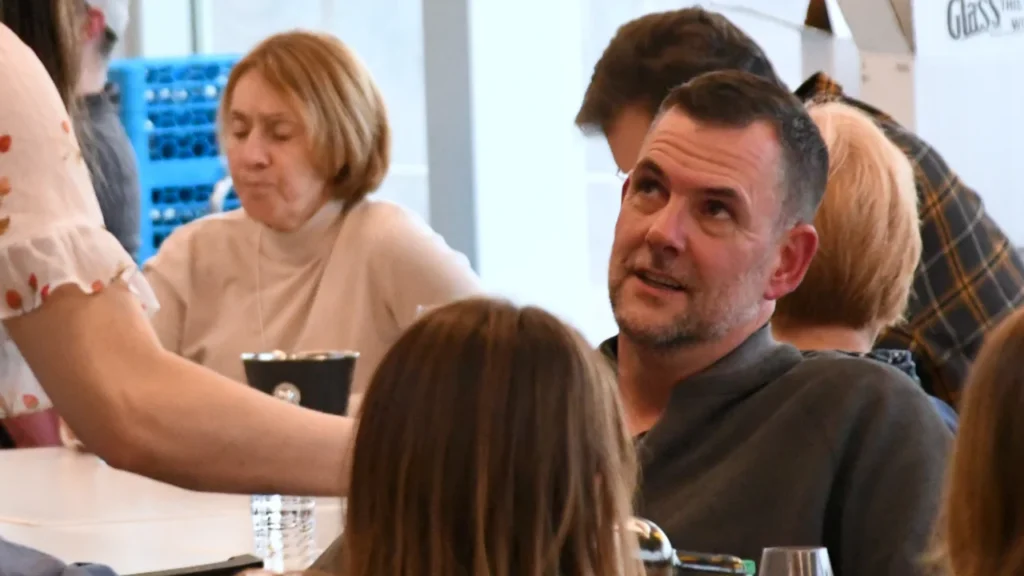
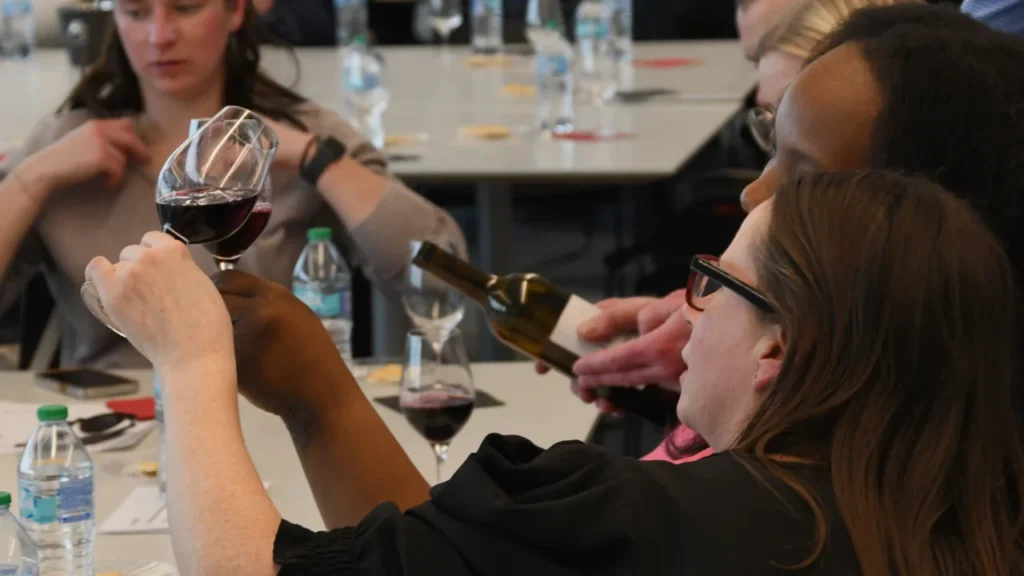
ティムは、テイスティング中の風味や香りをより一層引き立てるために考案された、ワインのテイスティング法「5つの『S』」――「見る(See)」「回す(Swirl)」「香りを嗅ぐ(Sniff)」「一口飲む(Sip)」「味わう(Savor)」――を参加者に紹介しました。 参加者は五感を活用し、味わいの特徴について自分の感想を報告するよう促されました。各テイスティングの後、リズはLECOを通じて収集されたクロマトグラムや分析対象物質に関する情報を共有しました。 ChromaTOFソフトウェア そして、科学が聴衆の認識をどのように裏付けているかを説明した。.
ワインの探索
参加者はリースリング、ソーヴィニヨン・ブラン、赤のブレンド、メルロの4種類のワインを試飲した。.
リースリング(白)
近くで収穫された SWMRECのブドウ畑 2023年10月にステンレススチールタンクで発酵
ソーヴィニヨン・ブラン(白)
地元のいくつかの畑から調達し、2025年10月に収穫し、ステンレス槽で発酵させたブドウ
レッドホーク・レッド(レッド)
2023年瓶詰。マルケット、カベルネ・フラン、メルロの3種類の「レッド」ぶどうのブレンド。主にステンレスタンクで発酵。.
メルロ(赤)
2023年10月に収穫。サニエと発酵前処理を施した後、オーク樽で熟成させ、その後瓶詰めした。.
Saignée is a process in red wine production, where a portion of juice is removed early in the process. This allows remaining juice to concentrate further. The extracted juices are often fermented as rosé.
Comparing the Chemistry of White Wines
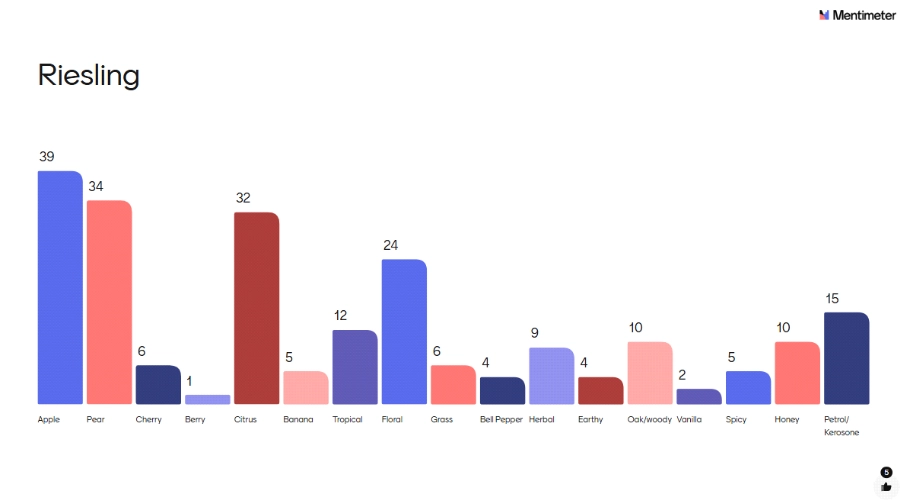
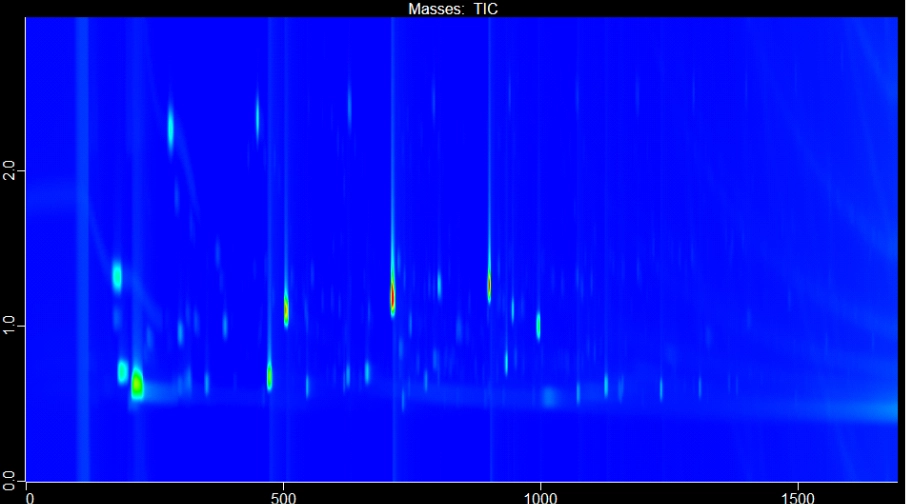
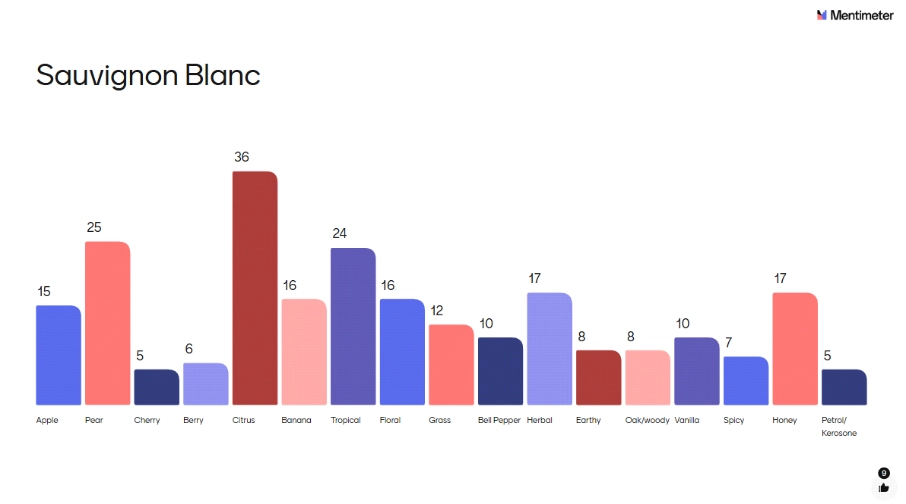
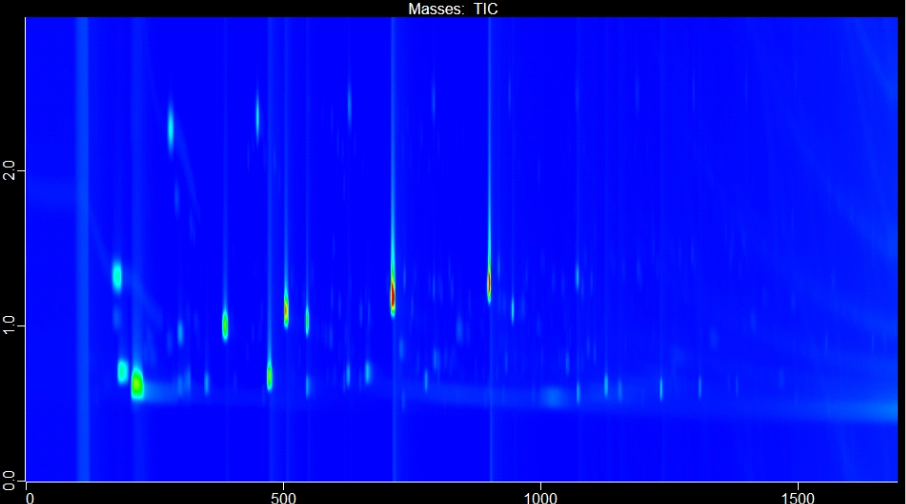
The audience tasting notes from the event are shown in the bar chart alongside the chromatograms for each of the wines. Some of the most selected aroma notes are common for both white wines (like apple, pear, and citrus), while other aroma notes are more distinct between the wines (like petrol for the Riesling and banana, tropical and herbal for Sauvignon Blanc).
When comparing the Riesling and Sauvignon Blanc chemical data, the chromatograms look very similar, but many differences were also observed. Overlapping esters are associated with some of these common fruity, apple, and pear notes. Terpenes contribute to some of the citrus, herbal, and floral notes.
One analyte unique to the Riesling wine is TDN (1,1,6-trimethyl-1,2-dihydronaphthalene). This analyte is known to provide a distinct “petrol” aroma. As Riesling wines age, this analyte continues to develop, and this aroma becomes more noticeable. At a young “age”, it might be harder to perceive as TDN may not have accumulated to a high enough level—but our GC-MS system easily determined the analyte, and many of our participants identified its aroma.
Participants also identified more grassy, tropical, and banana aroma notes in the Sauvignon Blanc compared to the Riesling. Our data supports this, and when comparing samples with ChromaTOF Sync 2D, it is easy to see several esters that are unique to the Sauvignon Blanc with these types of aromas.

Comparing the Chemistry of Red Wines
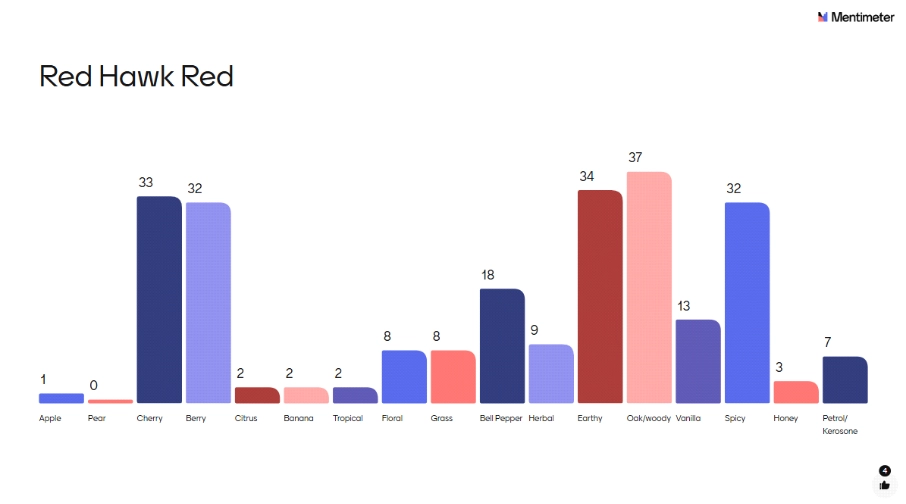
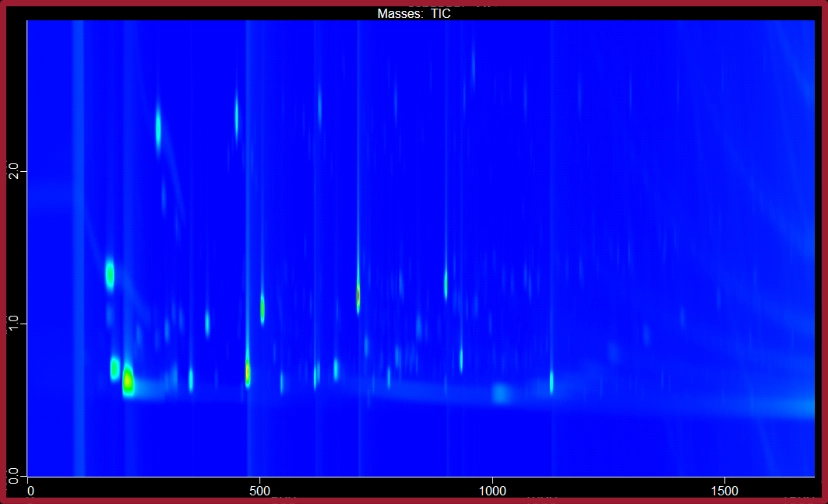


As both red wines sampled were produced using merlot grapes, it is not surprising to see so many similarities in the chromatograms when comparing the Red Hawk Red and the Merlot. The audience tasting notes for these wines were also quite similar. For example, participants overwhelmingly identified shared aromas: cherry, berry, earthy, oak/woody, and spicy.
The cherry and berry fruit notes of these wines were distinctly different compared to the fruit notes for the Riesling and Sauvignon Blanc, which were described as more apple and pear. These types of differences are likely associated with different combinations of esters in the wines. For example, several esters that were observed at higher levels in the red wines are shown here.
Comprehensive analysis also allows us to identify whiskey and oak lactones that are associated with oak barrels and unique to the red wines. These are observed at notably higher levels in the Merlot, but are also present in the Red Hawk Red. Both wines were aged in an oak barrel, but the merlot was barrel-aged longer (for 18 months); these analytes are imparted from the wood as the wine ages and many of our participants picked up these aroma notes.

Did you know? その CAS Registry is a universal standard for identifying chemical substances. The registry contains over 290 million identified substances, giving chemists a common reference for discussing chemical compounds.
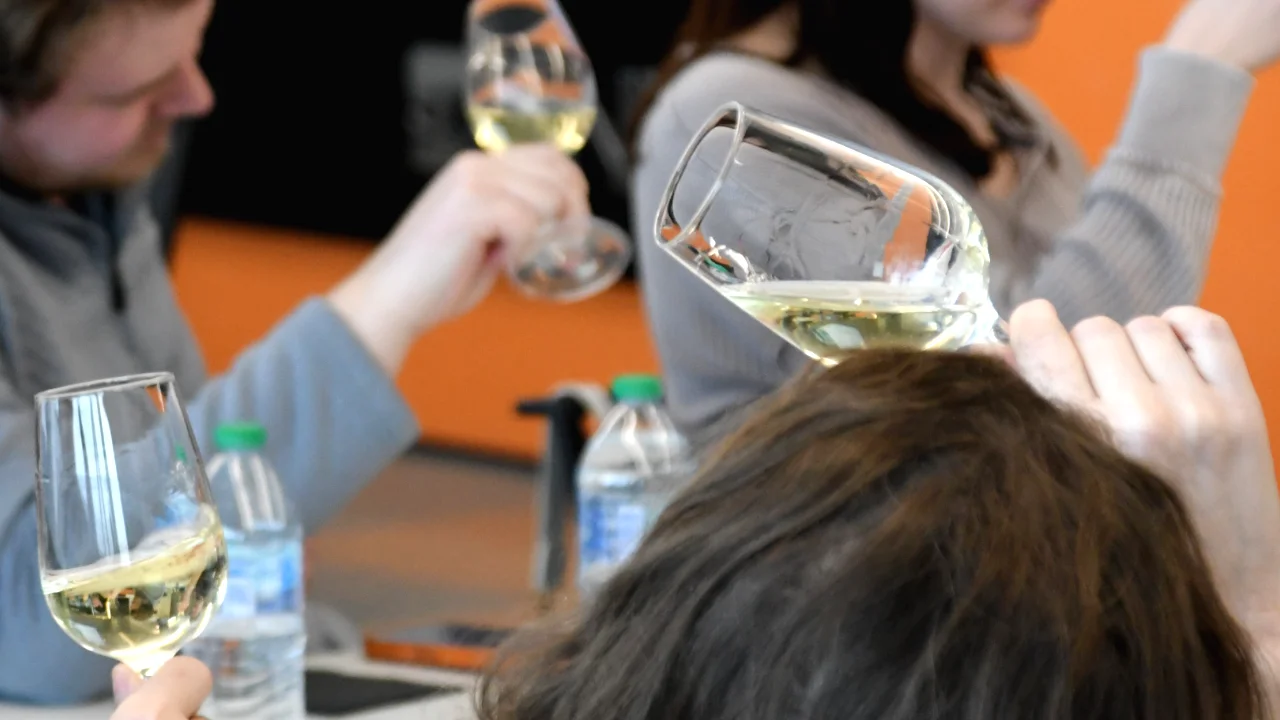
By bringing together Lake Michigan College’s educational expertise, the craftsmanship of Lake Michigan Vintners, and LECO’s analytical precision, we were able to peel back the curtain on the complex molecular world inside every bottle.
Whether it was identifying the “petrol” notes of a young Riesling through TDN or seeing the lactones imparted by an oak barrel, this collaboration showed that the science we study in the lab is the same craft we taste in the glass, forming the true foundation of our local flavors.
Experience the Chemistry Yourself
If you’re curious to explore how place, process, and chemistry come together in the glass, the best next step is simple: visit Lake Michigan Vintners. The wines tasted during this event were produced by students learning the craft from vineyard to bottle right here in Southwest Michigan. Every sip supports the next generation of winemakers and the continued growth of our local viticulture.
Plan your visit to the tasting room and support local student-crafted wine: Visit Lake Michigan Vintners
土壌分析
Moisture, carbon, and nitrogen in soil are the building blocks of grape quality. Learn more about LECO elemental analysis solutions to see how precise soil characterization supports a successful harvest.
Aroma Analysis
Are you curious about the science behind ‘petrol’ notes in Riesling, or the lactones in barrel-aged Merlot? Learn more about how the Pegasus GC-TOFMS platform identifies analytes that define a wine’s flavor.


 English
  Spanish
  Japanese
  German
  French
  Portuguese