
Veröffentlicht am
Die multidimensionale Gaschromatographie neu definiert: Die Pegasus BTX GC-MS-Serie
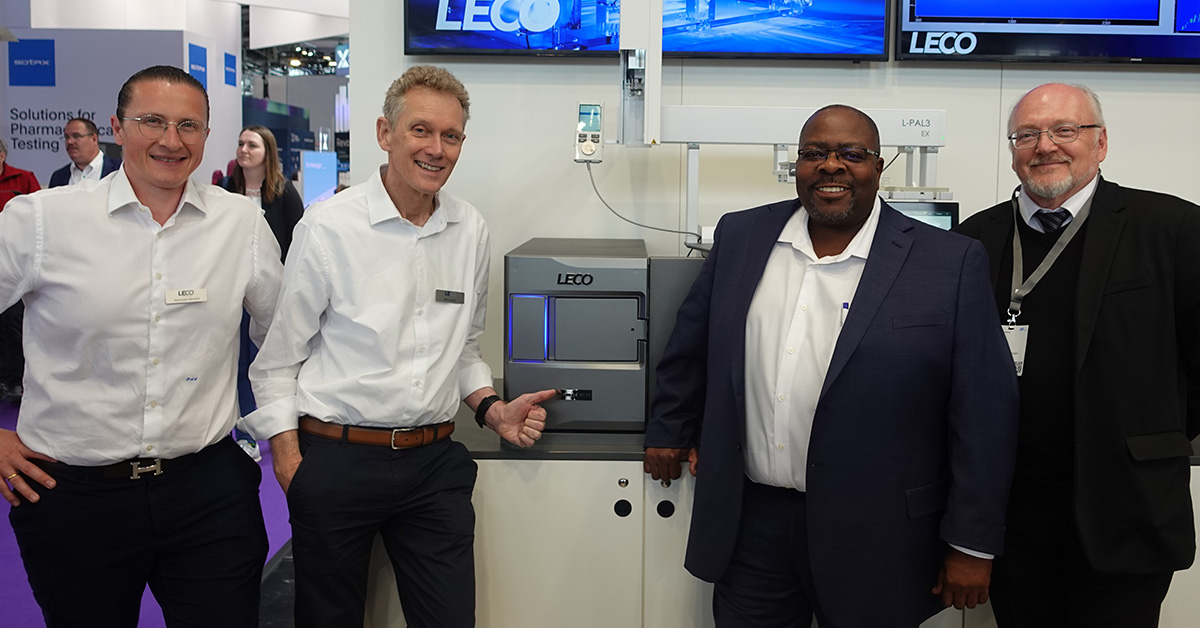
In complex chemical analysis, capturing every single analytes in a heavily congested sample matrix is a constant challenge. Missing a trace component can alter research outcomes, compromise product quality, or overlook a critical forensic clue. To address these extreme analytical demands, the LECO Pegasus BTX series combines high-performance multi-dimensional gas chromatography (GCxGC) with advanced time-of-flight mass spectrometry (TOFMS), providing an optimized benchtop solution for non-targeted screening.
The system is engineered for laboratories that have outgrown traditional single-dimensional GC-MS capabilities and require enhanced peak capacity and cleaner spectral deconvolution without expanding their lab’s bench footprint.
Maximizing Peak Capacity and Sensitivity
At the core of the Pegasus BTX’s performance is its ability to handle complex matrices where coelution is common. By utilizing multi-dimensional separations, the system uncovers critical trace-level compounds that are typically lost in the baseline of standard GC runs.
- Consumables-Free Modulation: When configured as the Pegasus BTX 4D, the system pairs with the Paradigmaflussmodulator or standard thermal modulation options. This allows laboratories to dramatically increase peak capacity and resolution without the ongoing cost, maintenance, and handling complexity of liquid nitrogen.
- High-Speed TOFMS Detection: Time-of-flight mass spectrometry provides the rapid acquisition rates necessary to accurately map the incredibly narrow peak widths generated by multi-dimensional chromatography.
Advanced Deconvolution with ChromaTOF
Hardware is only half of the equation; multi-dimensional data requires software capable of extracting meaningful insights efficiently. The Pegasus BTX series relies on LECO’s proprietary ChromaTOF software platform to automate the identification process.
Even when chromatographic peaks are not completely separated physically, the software’s automated spectral deconvolution mathematically separates overlapping mass spectra. This ensures clean, unadulterated spectra that can be cross-referenced with standard libraries (such as NIST or Wiley) with absolute confidence, minimizing manual data processing bottlenecks.
The Global Debut at Analytica
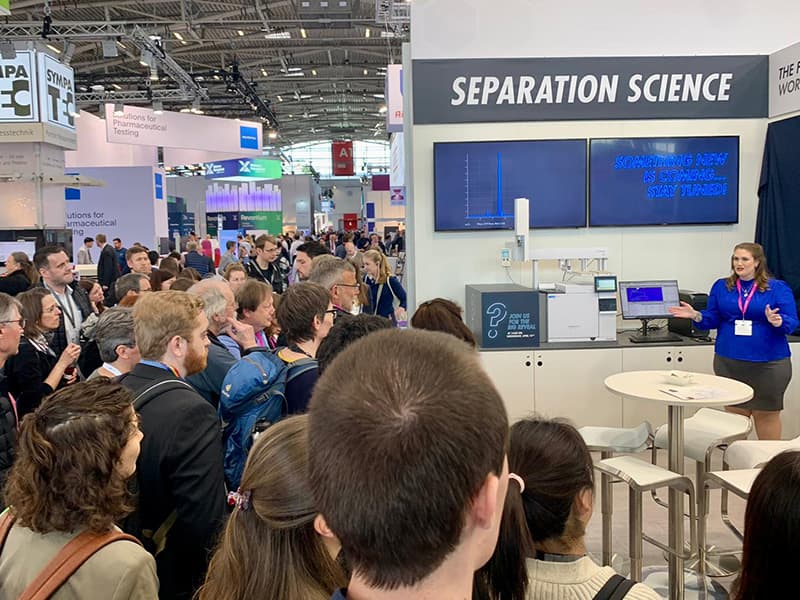
The development of the Pegasus BTX series was a multi-year journey of research, engineering, and rigorous testing at LECO. This milestone culminated on 10 April 2024, when the system made its official international debut at the Analytica exhibition in Munich, Germany.
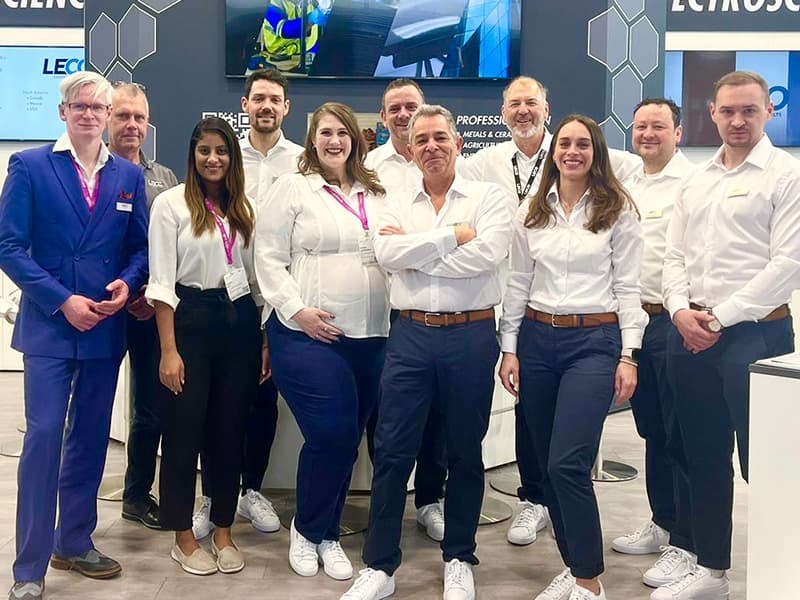
Introducing a benchtop GC-TOFMS with the market’s first two-year detector warranty required bringing together our global leadership and engineering teams to present the technology directly to the analytical community.
The global launch wasn’t just about revealing hardware—it was about establishing a new benchmark for long-term customer support and reliability in multidimensional chromatography. As Christine Loeb-Stubbins, LECO European Field Product Manager for Separation Science, noted during the debut: “It’s not just about selling products; it’s about making it work the best for the customers’ needs.”
Versatile Applications Across Industries
Because of its combination of high sensitivity and robust data processing, the Pegasus BTX series supports a broad range of application areas:
- Environmental Forensics: Tracking emerging contaminants, microplastics, and complex petroleum markers in vulnerable ecosystems.
- Flavor, Fragrance, und Lebensmittelsicherheit: Profiling intricate aromatic formulations and detecting trace-level off-flavors or contaminants in food matrices.
- Metabolomics and Biomarker Discovery: Identifying and profiling low-abundance metabolites within dense biological fluids.
By delivering high-end multi-dimensional performance in a practical, benchtop form factor, the Pegasus BTX series remains a cornerstone for laboratories pushing the boundaries of non-targeted chemical characterization.


 English
  Spanish
  Japanese
  German
  French
  Portuguese